
About the city
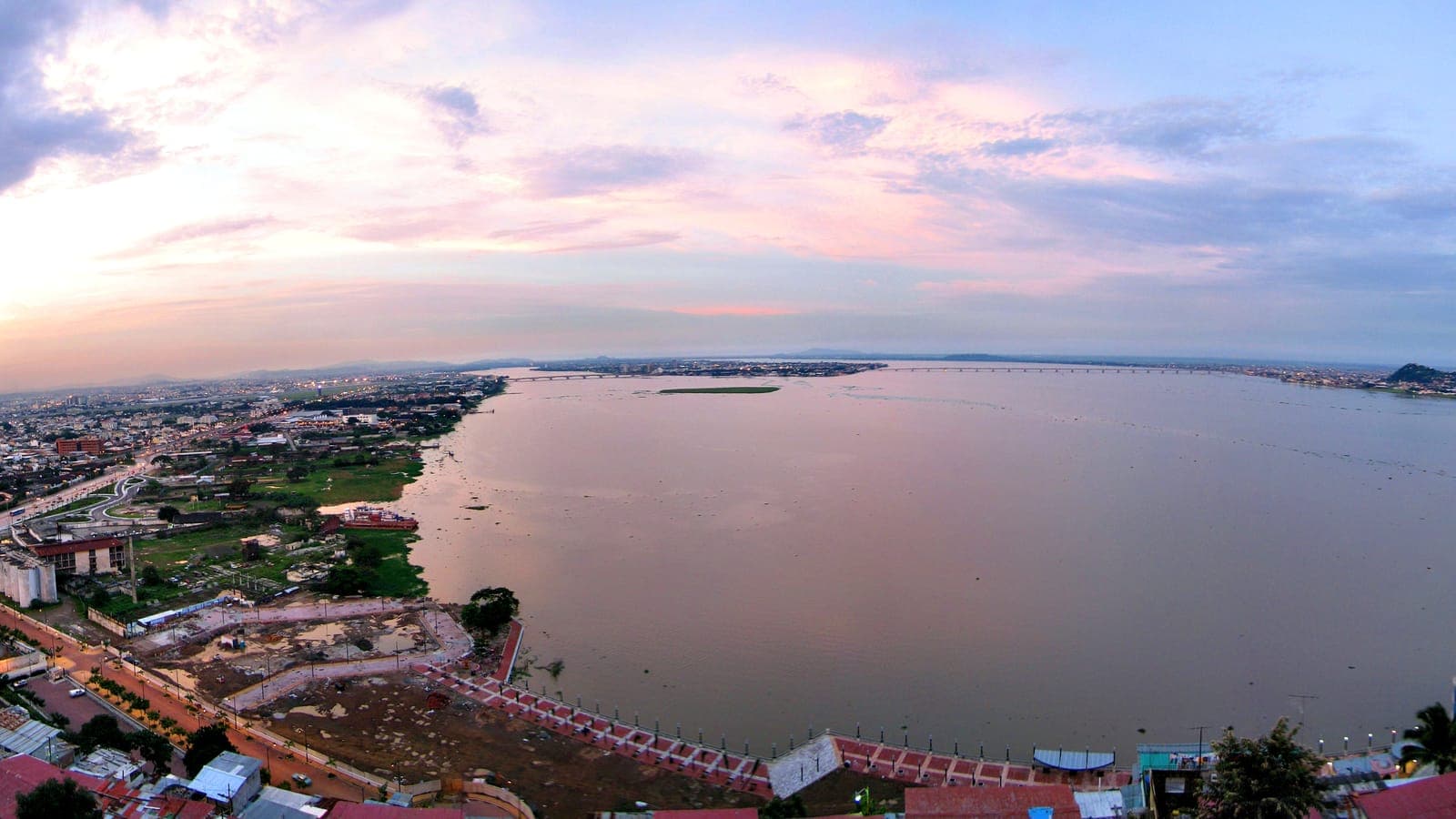
Santiago de Guayaquil, the Pearl of the Pacific, is Ecuador's most populous city and its principal economic engine. Situated on the banks of the Guayas River, close to the gulf that bears its name, it hosts the largest port on South America's western seaboard, channelling more than 70% of Ecuador's foreign trade. With nearly 2.75 million inhabitants, it is a metropolis that blends its commercial and port identity with a vibrant coastal culture expressed in the renovated malecón waterfront, the stairway neighbourhood of Las Peñas, and a mestizo gastronomy built around ceviche, seco de pato and patacones.
Sport is part of Guayaquil's soul. The Estadio Monumental Banco Pichincha — with a capacity of 57,267 spectators, the largest in the country — is the fortress of Barcelona SC, founded in 1925 and one of Ecuador's most popular and decorated clubs. The ground hosted five matches of the 1993 Copa América, including the final. Alongside the Monumental, Estadio George Capwell rounds out the city's football infrastructure, complemented by swimming, athletics and combat sports facilities spread across its 16 urban parishes.
Municipal sports management has taken a significant qualitative leap in recent years. The Municipio de Guayaquil's free sport programmes reach more than 68,000 people, with a strong focus on children, youth and older adults. The Guayaca Sport card — providing free Metrovía access to children and their parents enrolled in municipal programmes — was highlighted by ACES as a unique model in the Americas for integrating public transport, physical activity and social equity.
This management model was recognised in December 2025, when ACES Europe proclaimed Guayaquil the American Capital of Sport 2026 at the European Parliament in Brussels, making it the first Ecuadorian city to hold this title and the fourth Latin American municipality to join the Sports Capitals Network. The award, received by the municipal delegation led by Sports Director Carlos Morán, consecrates Guayaquil's commitment to sport as social infrastructure and an axis of urban cohesion.
Key facts
Events
Events registered on the platform
- 1er Torneo Internacional de Foot Table 2026 Guayaquil Capital Americana del Deporte 2026Sep 18, 2026SAD 2026
- Inauguración de cancha recuperada por Chelsea FC en el marco de la campaña Can’t Tame UsSep 17, 2026SAD 2026
- Rueda de prensa Foot TableSep 15, 2026SAD 2026
- Escuelas Municipales de Futsal: Futuro Goleador GuayaquileñoApr 29, 2026Abril
- Taller Femenino Autodefensa PersonalApr 28, 2026
- Taller Femenino Autodefensa PersonalApr 28, 2026Abril
- Escuelas Municipales de Futsal: Futuro Goleador GuayaquileñoApr 27, 2026Abril
- Escuelas Municipales de Futsal: Futuro Goleador GuayaquileñoApr 24, 2026Abril
- Icu Cheerleading ChampionshipApr 22, 2026Abril
- Icu Cheerleading ChampionshipApr 22, 2026